DistroKid Review: Is It Worth It?
Some links on this page are affiliate links. If you buy through them, Sound Tech Insider may earn a commission at no extra cost to you. How this works.
Short answer
YesYes. DistroKid puts music on every major platform quickly and for less than almost anyone else, and it has the years behind it to be trusted with a catalog. Budget for the upsells, and know that your releases come down if you stop paying.
Best for
Independent artists who release often and want the cheapest reliable way onto every major platform.
Skip it if
You release rarely and want your music to stay up without paying again every year.
DistroKid at a glance
- Verdict
- Yes
- Price
- From $24.99/year
- Free plan
- No
- Tested
- July 15, 2025
Affiliate link · Prices checked October 2026
How we tested DistroKid
I released a three-track EP through DistroKid in 2023 under my own artist name, and followed it through to July 2025: the upload flow, the Extras upsell at the end of it, royalty reporting across nine stores and nine countries, and the payouts themselves. The earnings screenshots below come from that account, with the artist name and track titles hidden, because the project is unrelated to Sound Tech Insider. Plans, prices and the extras were rechecked against DistroKid's own pages in October 2026.
Most distribution reviews are written by someone who signed up, uploaded a test track and never looked again. This one is written from a release that stayed up for two years and then came down, with the royalty reports to go with it.
In 2023 we put a three-track EP through DistroKid under a private artist name, and followed it until the last royalty line landed in July 2025. What follows is the upload, the upsell, the reports and the money.
Short version: it does the job, it is cheap, and the parts that annoyed us are mostly about how it sells to you rather than how it works.
What is DistroKid?
DistroKid is a music distributor. It takes your finished audio and delivers it to streaming services and download stores, collects the royalties they pay, and passes them to you. You keep 100% of what comes in, and you can split it automatically with collaborators.
It charges like software rather than per release: one yearly fee, as many releases as you like. That is the thing that made it unusual when it launched in 2013, and it is still the reason most independent artists end up there.
What it does not do is promote you. There is no marketing, no artist development, no audience waiting on the other side of the upload.
Getting a release online
The upload is the best part of the product, and it is genuinely quick. You add the audio, the artwork and the credits, choose your stores, and set a release date if your plan allows it.
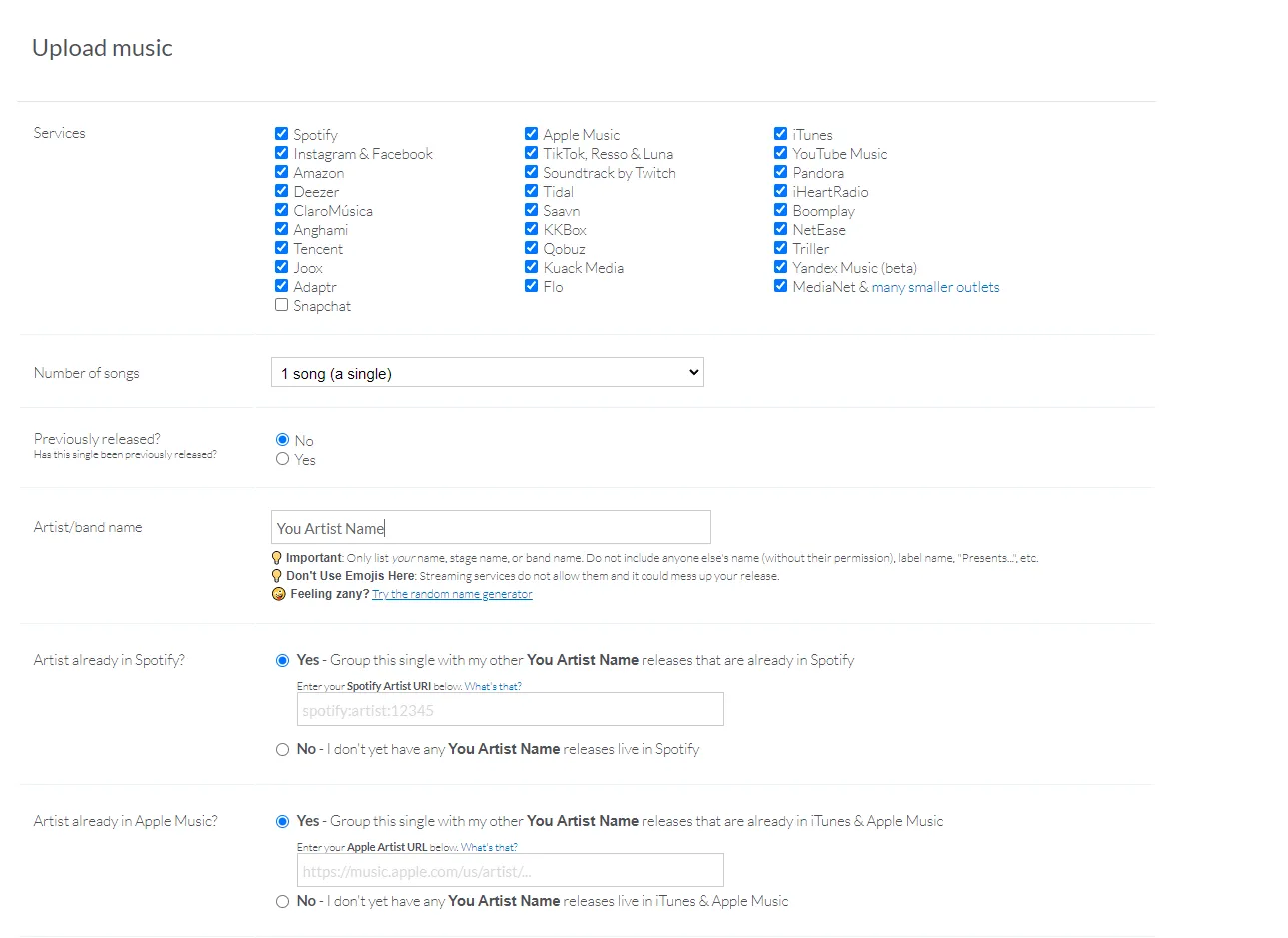
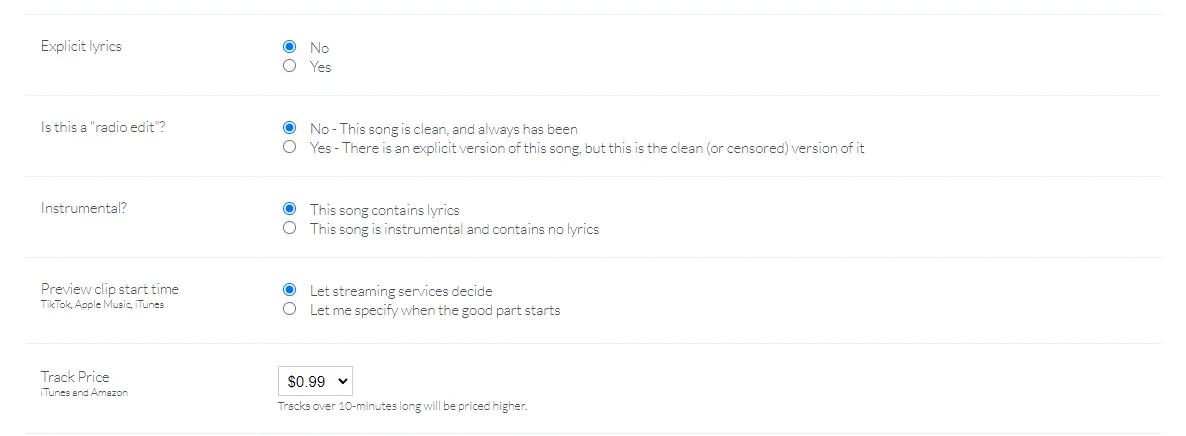
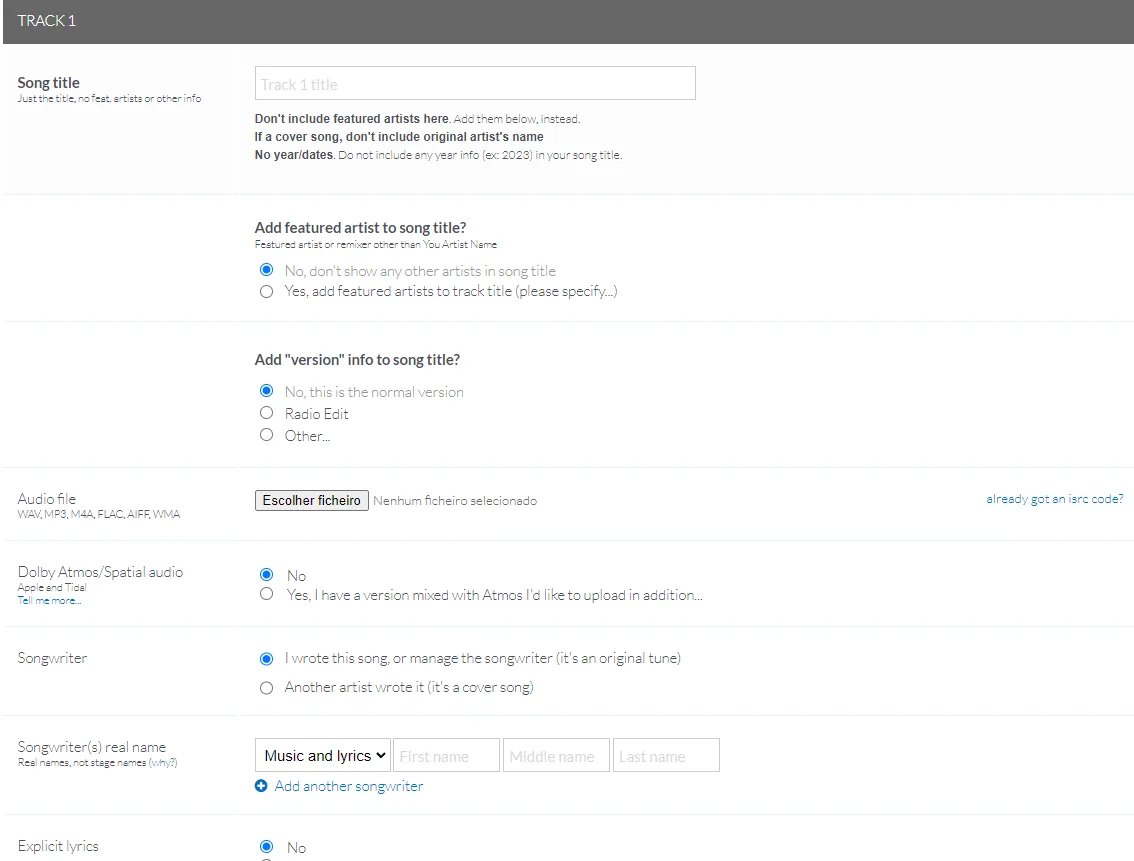
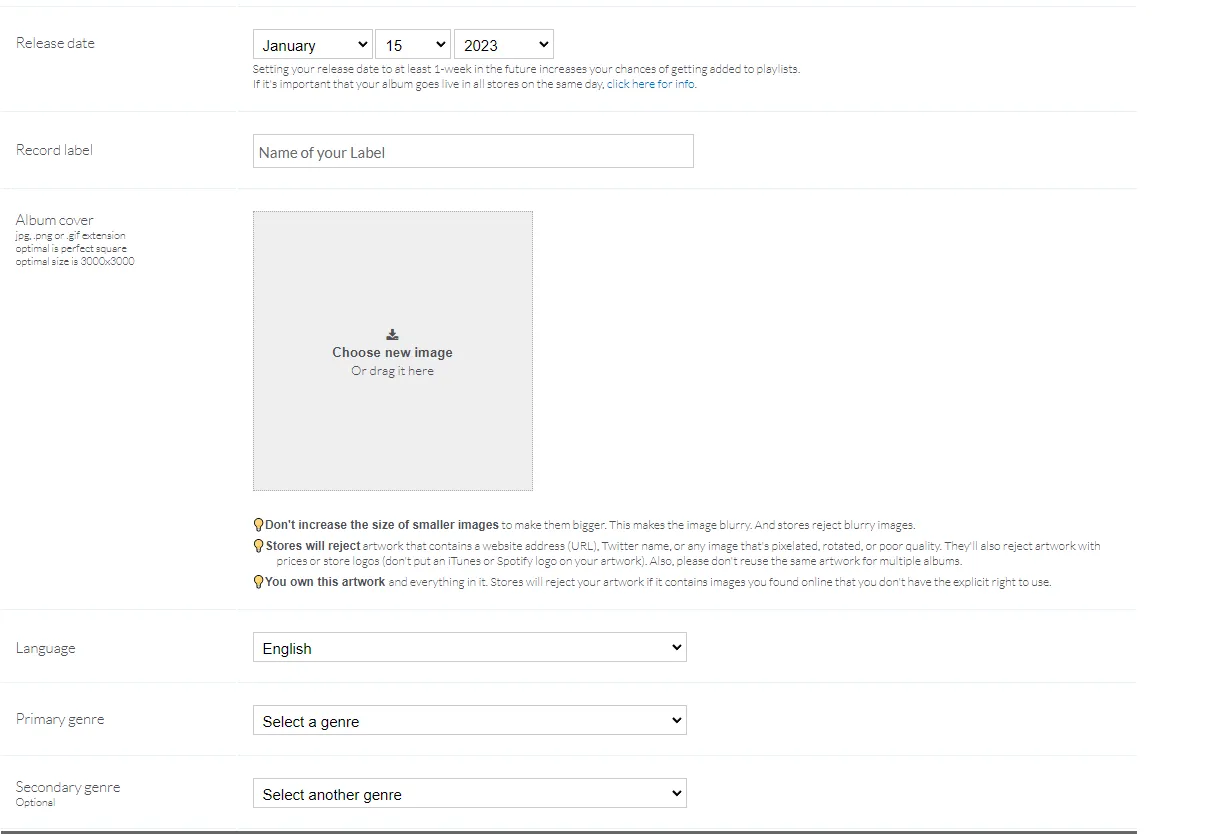
Nothing about it needs explaining, which is the compliment it deserves. Our EP went from finished masters to scheduled release in one sitting, and the tracks appeared on the major platforms within a few days.
Then comes the part we liked least.
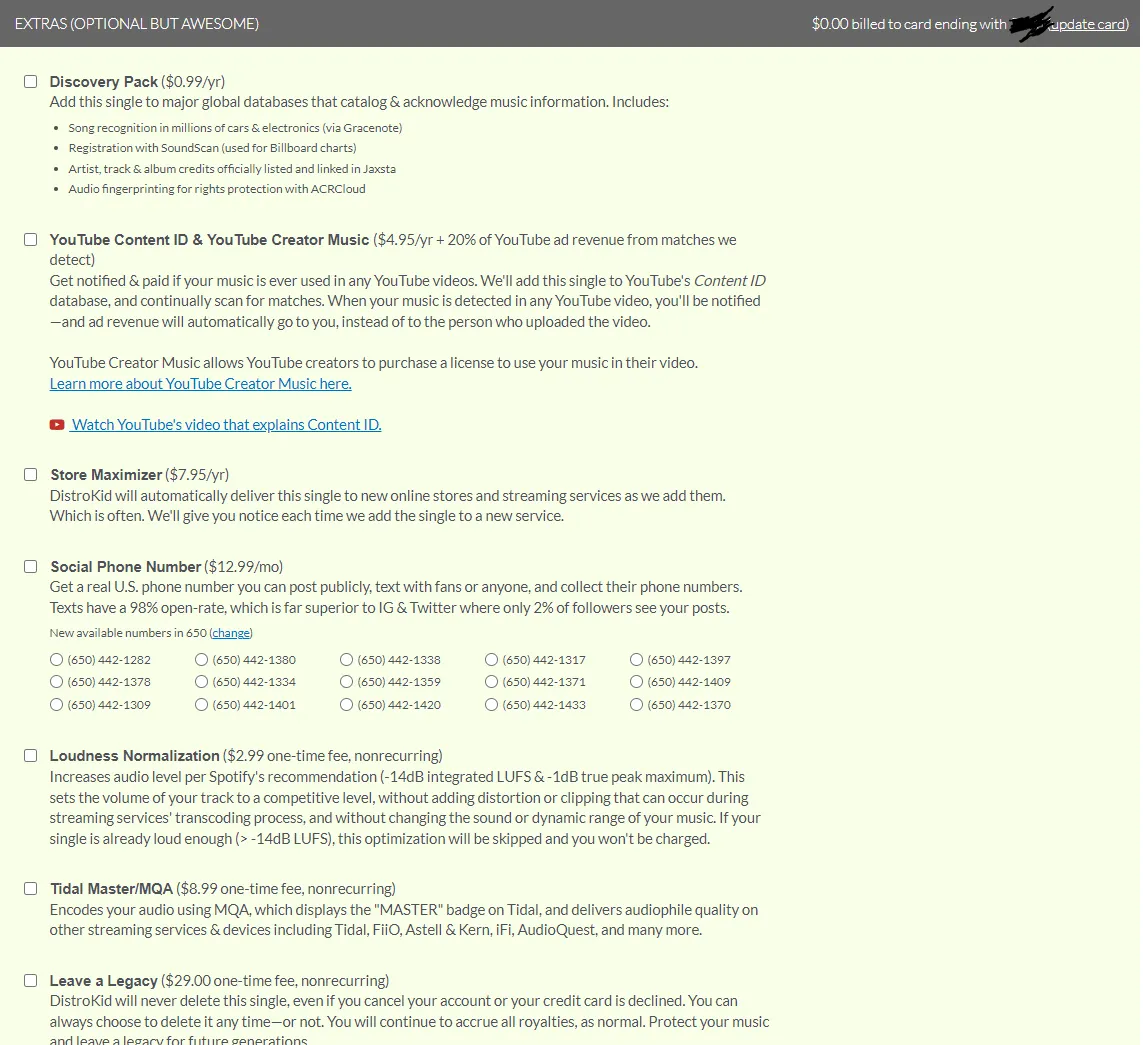
The Extras window as it looked when we first tested DistroKid in 2023. The moment still works the same way, but the list has changed: Social Phone Number and Tidal Master/MQA are gone, and YouTube Content ID is now part of the Social Media Pack. The current list and prices are in our DistroKid pricing guide.
You reach it after you have paid for your subscription, with your release filled in and your finger over the publish button. It is a checkbox list of paid add-ons, several of them annual and charged per release, presented at the exact moment you are least inclined to read carefully.
None of it is mandatory and most of it is skippable. But being sold to at the finish line is the single thing we would change about DistroKid, and it is why we wrote a whole guide to what each extra is worth.
What getting paid actually looks like
This is the part reviews tend to skip, because it needs a catalog that has been earning for a while.
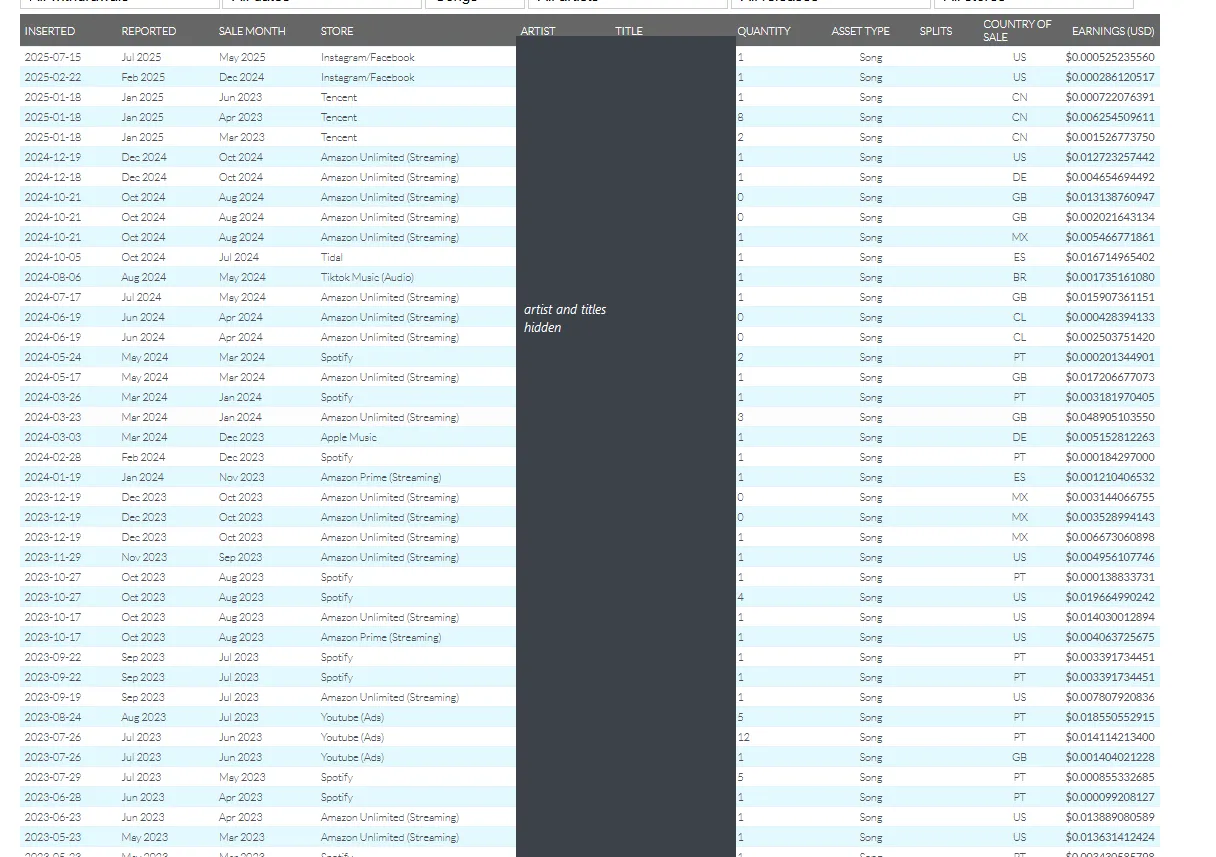
Our own royalty report, 2023 to 2025. Artist name and track titles hidden; everything else is as DistroKid shows it.
Three songs reached nine stores — Spotify, Apple Music, Amazon Unlimited and Prime, Tidal, YouTube, TikTok, Instagram and Facebook, and Tencent — across nine countries. For a one-off EP with no promotion behind it, the distribution side did what it promised.
The money is where it gets interesting. Each line is a store, a country, a month and an amount, carried to twelve decimal places. Reading across our own report:
- Amazon Unlimited in the UK paid around $0.016 a stream.
- Tidal in Spain was similar, around $0.017.
- Spotify in the US came to roughly $0.005.
- Spotify in Portugal paid about $0.0001.
Same three songs, same distributor, same week in some cases. The spread between the best and worst rate we saw is more than a hundredfold, and none of it is anything DistroKid controls: per-stream rates are set by each platform, in each territory, against whatever that market pays.
Two honest caveats. This is one EP with small numbers, so treat it as a demonstration of the spread rather than a benchmark. And the quantity column does not always behave like a clean stream count — several rows show a quantity of zero against real earnings — so we have read these as ranges, not precise rates.
What it does show, clearly, is that “how much does a stream pay” has no single answer, and anyone quoting you one figure is averaging away the thing that actually determines your income.
How long the money really takes
There are two different waits here, and most reviews blame DistroKid for both.
DistroKid pays you quickly. When we withdrew, the money arrived in three to four days, against the one to fourteen days they state. That is them beating their own promise.
The stores report slowly, and that is the real wait. Our report carries three dates on every line: the month of sale, the month it was reported, and the day it was inserted into the account. Most lines landed two to three months after the month of sale, which matches what DistroKid tells you to expect.
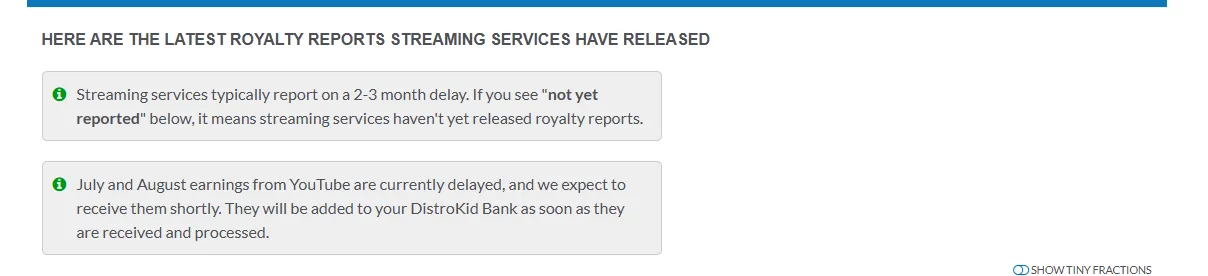
Some took very much longer. Three Tencent lines, for sales in March, April and June 2023, all arrived on the same day in January 2025 — around 22 months after the fact. Delays are normal enough that DistroKid keeps a standing notice about them on the page.
So the honest answer to “how fast do I get paid” is: fast, once the money exists, and the money exists months after the stream. Budget your expectations around the quarter, not the week.
Pricing
| Plan | Price | What you get |
|---|---|---|
| Musician | $24.99/year | 1 artist or band; unlimited songs and lyrics |
| Musician Plus | $44.99/year | 2 artists or bands; adds synced lyrics in Apple Music, daily streaming stats, custom label name and release dates |
| Ultimate | $89.99/year | 5 artists and up (packages up to 100); adds advanced analytics, file sharing and Spotify and Apple Music monitoring |
Prices checked October 2026. Check current prices before you buy.
Musician, at $24.99 per year, covers one artist name, with unlimited songs and lyrics, royalty splits and a registered artist profile on Spotify.
Musician Plus, at $44.99 per year, adds a second artist name, synced lyrics in Apple Music, daily streaming stats, and control over your label name, release date, pre-order date and iTunes pricing.
Ultimate starts at $89.99 per year and covers five artists, with packages scaling to 100.
The extras are a longer story, and we have priced every one of them in the DistroKid pricing guide.
Is DistroKid worth it?
Short answer: yes, for an artist who releases more than once a year.
Long answer. The core service is cheap, quick and dependable. Our EP went up without friction, reached every platform we asked for, reported honestly, and paid faster than promised once the money existed. DistroKid has been doing this since 2013, which matters when you are handing a catalog to a company you are trusting to still be there in five years.
The reservations are real but they are not about the distribution. The upsells are wearying and arrive when your guard is down. The yearly model means your music is only up while you keep paying, and we can say that from the wrong side of it: our own EP is off the stores now. And if you want insurance against that, DistroKid sells it, at a one-time fee per single that costs more than a year of the cheapest plan.
None of that outweighs getting music onto every major platform for less than the price of a couple of coffees a month, which is why the verdict stays yes.
Who it is for, and who should skip it
Get it if you release regularly, want your music everywhere quickly, and would rather pay a small annual fee than a charge per release.
Skip it if you release rarely and you want your music to stay up without paying again each year. A one-time distributor such as CD Baby charges per release and keeps a percentage of what you earn, which costs more on a release that does well and nothing at all in the years you put nothing out.
Sign up through our referral link and you get 7% off your first year — it also helps keep this site running.
Limitations
- The upsells arrive at the worst possible moment: a window of paid add-ons at the end of the upload flow, after you have already paid for your subscription and seconds before you publish.
- Stop paying and your music comes out of the stores. Our own EP is no longer on streaming services for exactly that reason, and the one-time fee that would have prevented it costs more per single than a year of the cheapest plan.
- Royalties take months to appear, and occasionally far longer. Most of our rows reached the dashboard two to three months after the month of sale; three Tencent rows took around 22 months.
- A downgrade only takes effect at your next renewal, and the difference is not refunded, so choosing too expensive a plan costs you the rest of the year.